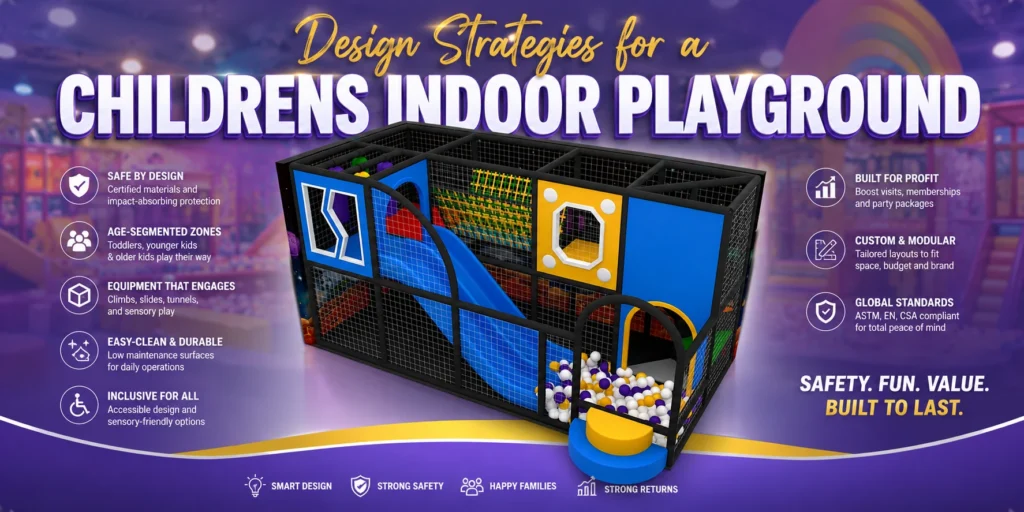
Schools, community centres, franchise operators, and OEM buyers share a growing problem: demand for weather-independent play space keeps rising, but visitor expectations have moved beyond basic soft play. Families now judge venues on equipment variety, safety, cleanliness, and perceived value. Specify the wrong system and you face costly retrofits, underused floor space, and disappointed repeat visitors.
A children’s indoor playground is a climate-controlled, safety-equipped play space featuring climbing structures, slides, ball pits, soft play elements, and designated toddler zones.
The sections ahead explain the end-user expectations, design zones, cost drivers, and safety and inclusivity standards that should guide your equipment specification.
What Families Expect From a Modern Indoor Playground
Families judge a venue within minutes: safe, visible play areas for children and a comfortable spot for adults to watch. Operator pages consistently advertise climbing structures, slides, ball pits, trampolines, and themed zones that keep children engaged for a full session. Party rooms and café seating with sightlines to the play floor are standard, because siblings, parents, and birthday groups extend visit time.
Revenue-generating offerings typically include:
– Memberships and multi-visit play passes
– Daily admission pricing tiers
– Birthday party packages (often branded Super, Mega, or Colossal)
Buyers competing with established venues must match these expectations in layout, equipment range, and service design, whether you are specifying for a commercial centre or a school playground manufacturer.
Designing Age-Segmented Play Zones and Selecting Equipment
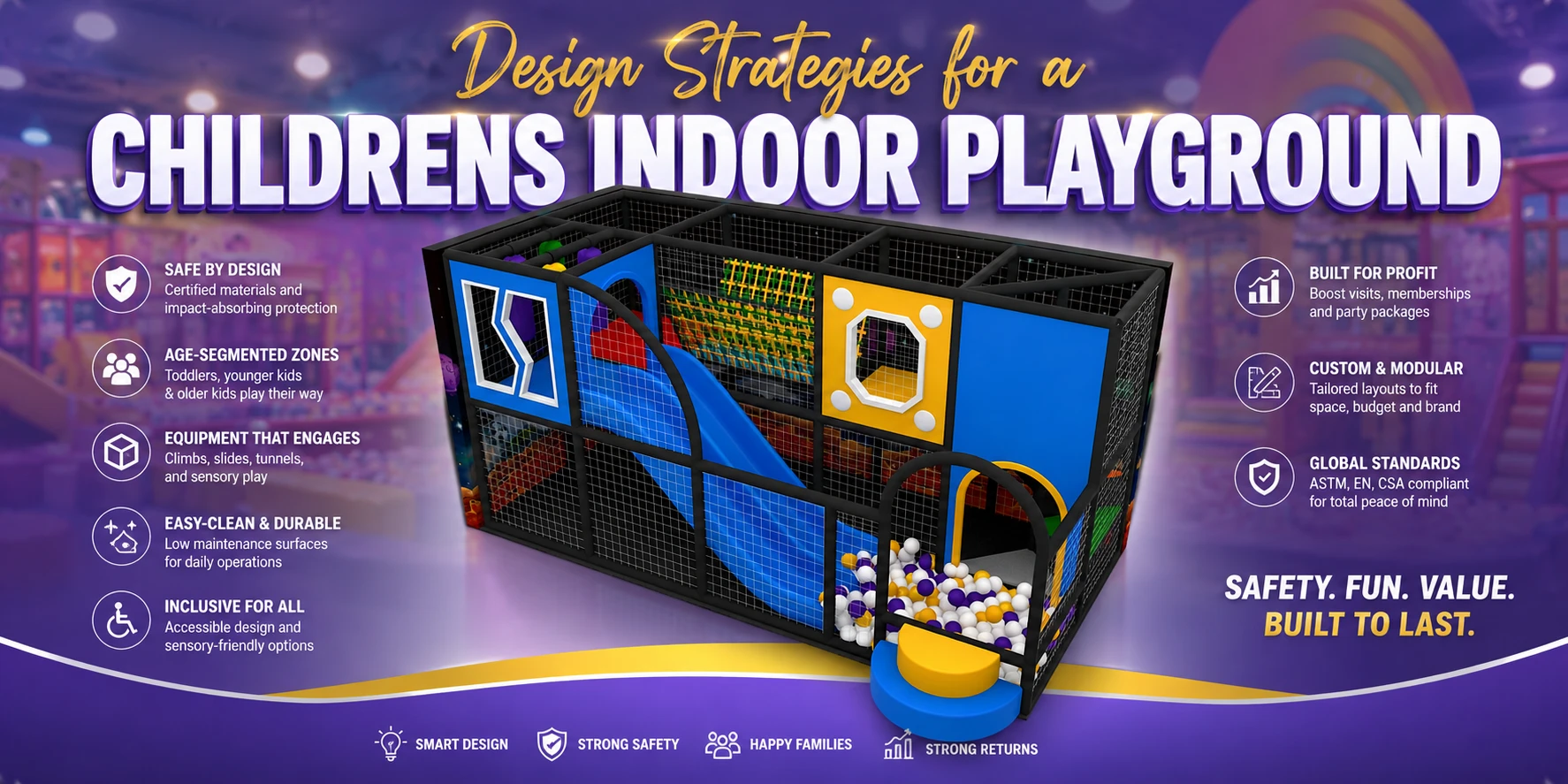
Designing a childrens indoor playground by age segments protects younger visitors and boosts repeat visits. Separate zones let each age group play at their own pace while keeping supervision sightlines clear.
Toddlers (0–3)
Soft play blocks, low-height slides, and shallow ball pits suit this group. Rounded edges, dense foam, and contained layouts reduce fall risk. Floor-level parent seating keeps carers close without crowding the play space.
Younger Children (4–7)
Climbing frames, interactive panels, and moderate slides match their growing confidence. Sensory panels and themed soft play support imaginative role-play. Mid-height platforms create safe challenges without demanding adult help.
Older Children (8–12)
This group needs larger climbers, obstacle courses, and active challenges. Rope bridges, tunnels, and timed obstacle runs keep them engaged and give families a reason to return.
For OEM buyers, modular platforms, themed soft play, sensory panels, and inclusive elements can be customised to fit your space, budget, and brand identity.
Indoor Playground Cost Drivers and Revenue Models for Operators
Budgeting starts with cost per square foot, but equipment choice drives the spread. Flooring and safety surfacing, installation, lighting, HVAC, and insurance typically add 30–50% over equipment alone. Ask your OEM kids playground manufacturer for an itemised quote covering each line.
| Configuration | Cost per sq ft (installed) | Typical scope |
| Budget (economy) | £25–£40 | Soft play modules, low slides, basic ball pit |
| Mid-range | £40–£70 | Multi-level climbers, toddler zone, interactive panels |
| Premium | £70–£110+ | Themed custom structures, sensory play, integrated lighting |
Revenue models then set payback. Daily admission builds footfall; membership tiers, such as 10-visit passes or unlimited monthly plans, smooth cash flow; and tiered party packages (Super, Mega, Colossal) deliver the highest margins. A mid-range 5,000 sq ft centre might cost £200,000–£350,000 installed, so budget for initial CAPEX and ongoing operational costs. Safety-compliant materials and easy-clean surfaces also influence the specification — a point we return to next.
Safety, Cleanliness, and Inclusive Play Standards That Influence Specs
Safety, cleanliness and inclusive access standards do more than keep a venue compliant — they determine which materials, components and layouts a kids indoor playground manufacturer can realistically supply.
Safety standards
Shock-absorbing surfacing, gated entry points and padded edges are non-negotiable.
- ASTM, EN and CSA standards set structural and impact-testing requirements.
- Specify rubber or foam flooring with verified critical fall heights.
- Add self-closing gates, rounded edges, and clear sightlines so staff can supervise every zone.
Cleanliness standards
Easy-clean design directly affects daily operating costs.
- Use wipeable, non-porous surfaces for platforms and soft play covers.
- Schedule daily sanitisation of ball pits, mats and high-touch surfaces.
- Specify HVAC filtration that manages dust, allergens and airborne germs.
Inclusive play standards
Accessible equipment widens your market and your appeal.
- Include wheelchair-accessible raised platforms and transfer points.
- Offer sensory-friendly hours with dimmed lighting and reduced noise.
- Add quiet zones and interactive panels suited to neurodivergent children.
These choices flow into every specification you share with suppliers.
About JQ Playground – kidsplaygroundmanufacturer.com
JQ Playground (Wenzhou Jiqi Amusement Equipment Co., Ltd.) is a children’s playground equipment manufacturer founded in 1993. The company provides design, customization, large-scale manufacturing, sales, installation guidance, and after-sales support for outdoor playgrounds, indoor playgrounds, soft play, water playgrounds, PE board playgrounds, kindergarten furniture, outdoor fitness equipment, pet playgrounds, and playground facilities. Approved company facts include 180+ employees, a large Wenzhou production base, 20+ production lines, 55 production machines, ISO/BSCI/EN1176/EN71/ASTM/CPC/CPSIC certification references, 100+ patents, free design support, OEM/ODM capability, trial installation before shipping, export experience, and one-year quality warranty.