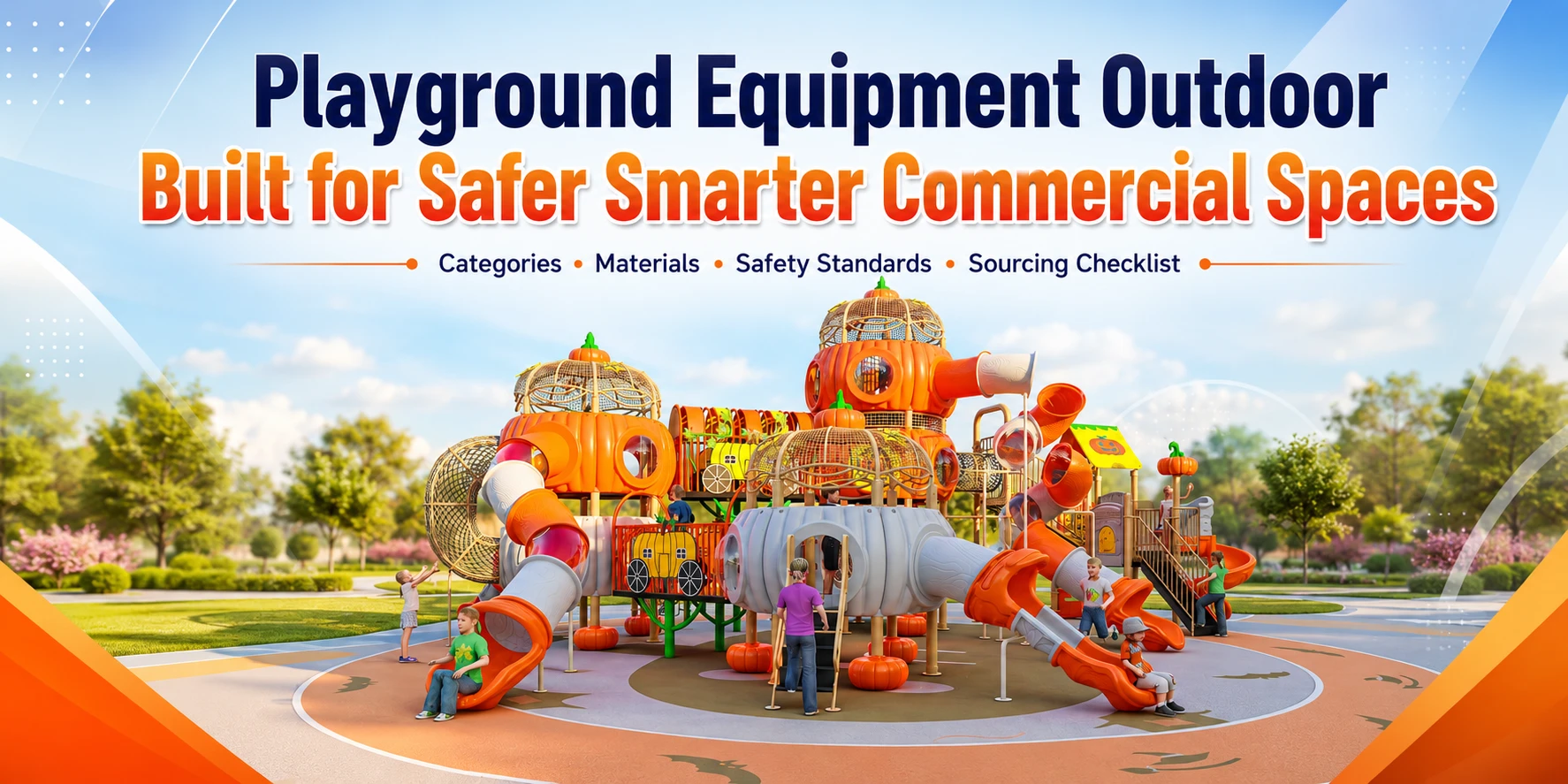
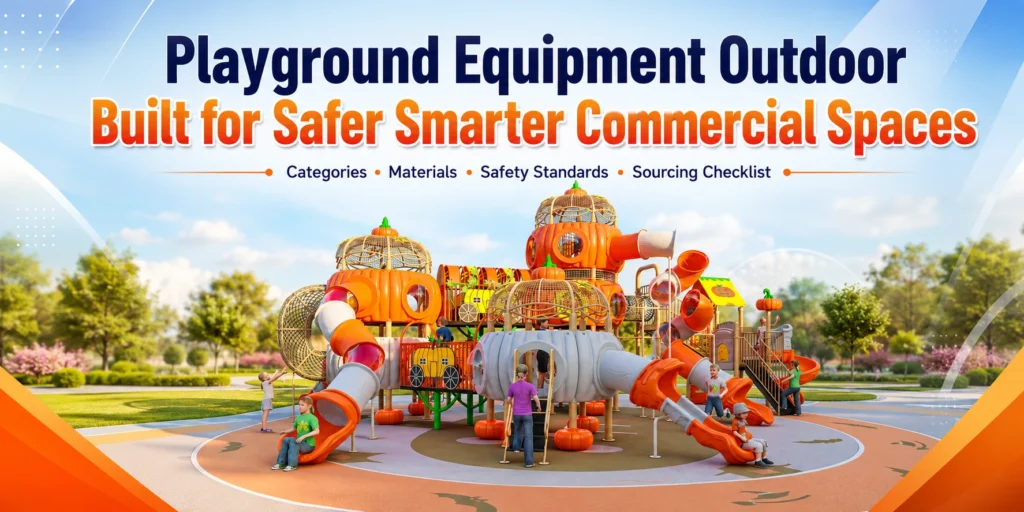
For playground equipment outdoor, buyers need guidance that matches the exact query intent before comparing suppliers, specifications, or RFQ details.
If you are sourcing equipment for a school, public park, or community development project, the breadth of options can feel overwhelming. You need structures that withstand heavy daily use, meet safety standards, and suit a specific age range.
The term outdoor playground equipment covers slides, swings, climbers, and modular play units engineered for commercial or institutional settings. Unlike residential sets, these pieces are built for higher traffic and longer service life.
Buyers typically evaluate equipment by material type—polyethylene, metal, or wood—and need clarity on how each performs in their local climate. Safety certifications, age-appropriate design, and inclusive access are also critical considerations. Whether you work directly with a kids playground manufacturer or source through a distributor, having a clear specification upfront reduces lead times and cost overruns.
The following sections break down the main equipment categories, compare material options, and outline the certifications and sourcing steps you will need to complete your project.
Categories of Outdoor Playground Equipment for Commercial Installations
Commercial playgrounds need equipment that works for different age groups, spaces, and budgets. The main categories each serve a specific purpose, so matching the type to your project site matters.
- Swings – belt swings for ages 5–12, bucket swings for toddlers (2–5 years), and inclusive models with high-back seats or harnesses for children with physical disabilities. Parks and schools install them on 2–4-bay frames. Buyer check: ensure 30 cm minimum ground clearance under the seat and 1.8 m fall-zone surfacing.
- Slides – straight slides are common on low-height units; spiral and tube slides add excitement and cover more slide length in a smaller footprint. Tube slides reduce sun exposure and can be enclosed for younger users. Typical use: community playgrounds and school Yards. Key spec: metal slides heat up faster than PE board – choose plastic in hot climates.
- Climbers – arch climbers, cargo nets, and rock walls develop gross motor skills. Arches suit 2–5 year olds; net climbers and rock walls fit 5–12 year olds. Buyers should verify weight limits and grip spacing to avoid entrapment (spacing ≤ 89 mm or ≥ 230 mm per EN 1176).
- Modular play structures – multi-level frames combining platforms, slides, climbers, and bridges. They are the most popular choice for school playground equipment manufacturers because they consolidate several play functions in one footprint. Ensure modular decks are at least 1.5 m² and have guardrails on platforms above 50 cm.
- Standalone pieces – see-saws, spinners, and spring riders. See-saws need 60 cm clearance on each side; spinners require a low-friction bearing surface. These are compact options for community centres and preschool gardens. Always check ADA compliance: ground-level accessible routes for wheelchairs.
Each category should be evaluated by age range (2–5, 5–12, or inclusive), durability (UV-stabilised plastics, galvanised steel fixings), and whether the design meets your local certification (ASTM F1487, EN 1176). The following section compares the three common structural materials so you can select the right finish for your climate and maintenance schedule.
Material Comparison: PE Board vs. Metal vs. Wood for Outdoor Play Structures
The three primary materials for commercial outdoor playground equipment each carry distinct trade-offs in durability, safety, and long-term cost. PE (polyethylene) board, aluminium or galvanised steel, and treated wood affect everything from heat absorption to maintenance schedules in different climates.
| Material | Performance in Different Climates | Estimated Lifespan | Typical Use Cases |
|---|---|---|---|
| PE Board | Low heat retention (~40°C in direct sun); resistant to moisture, UV, and salt air | 10–15 years with UV-stabilised grades | Modular playgrounds, kindergartens, coastal parks; popular with custom kids playground manufacturers |
| Metal (galvanised steel/aluminium) | High heat retention (up to 60°C); requires shade or powder coating; rust risk in coastal zones if not galvanised | 15–20 years with proper coating | Heavy-duty public parks, school adventure towers, urban modern designs |
| Treated Wood | Moderate heat retention; risk of splintering and rot in humid or freeze-thaw climates | 5–10 years depending on sealing and annual oiling | Natural-themed playscapes, rural community sites, budget-conscious installations |
PE board offers the lowest ongoing maintenance and stays cooler in summer, making it the preferred choice for kindergarten playground manufacturer projects and shaded modular units. Metal structures suit high-traffic zones and modernist aesthetics but require careful surface treatment to prevent burns and corrosion. Wood demands regular inspection and refinishing to avoid splinter hazards and structural decay.
Essential Safety Certifications and Standards for Outdoor Equipment
Before you approve any supplier, confirm their equipment meets the relevant standard for your market. For the US, that is ASTM F1487; for Europe, EN 1176; for Australia, AS 4685; and for Canada, CSA Z614. Each standard specifies minimum requirements for impact-absorbing surfacing, entrapment protection, and structural anchoring.
ASTM F1487 covers critical fall heights, head and neck entrapment prevention, and load-bearing for swings and climbers. EN 1176 goes further with risk-assessment documentation and three levels of impact-zone testing. AS 4685 aligns closely with EN 1176 but adds tropical climate considerations for UV degradation and heat retention. CSA Z614 includes Canadian-specific anchoring guidelines for high-wind zones and frozen ground conditions.
You should request the supplier’s test reports from an accredited third-party lab, not just a certificate. Any OEM kids playground manufacturer or ODM kids playground manufacturer you evaluate should provide these on request during the RFQ stage.
Red flags that should stop you from proceeding:
- Supplier cannot name the specific standard their equipment meets
- Certificate issued by a non-accredited or unknown body
- No test reports for impact surfacing or entrapment gaps
- Claims of “certified” but refuses to share documentation until after order
Failing to verify these certifications exposes you to liability, failed inspections, and costly retrofit work later.
Sourcing Checklist for Outdoor Playground Equipment Suppliers
Before issuing a request for quotation, compile a structured checklist that covers the six critical areas: minimum order quantity, lead time, custom design, export packaging, warranty, and installation. The following questions will help you compare suppliers on an equal footing.
- What is your MOQ per model, and can you combine SKUs? Many manufacturers set a minimum of 150–300 units for standard items. Ask whether you can mix colours or accessory options to reach the MOQ without over-ordering.
- What is your typical lead time from order confirmation? Expect 30–45 days for standard designs, longer for custom builds. Request a production schedule breakdown and ask about rush-order fees.
- Do you offer OEM/private labelling? If you need your branding on the equipment, confirm whether they supply custom logo plaques, colour-matching, and packaging inserts. A kids outdoor playground manufacturer experienced in OEM can usually share a full brand customisation guide.
- What load testing process do you use? Ask for the static and dynamic load figures they test to (e.g., 120 kg swing seat, 300 kg slide entry). Request test reports per batch.
- How will the equipment be packed for export? Check whether they use bubble wrap, corrugated board, plywood crates, or shrink wrap. Confirm if packaging is suitable for sea freight or mixed container loads.
- What warranty terms apply, and what does installation support look like? Most suppliers offer 1–2 years on structural components. Ask whether installation manuals, video guides, or on-site supervision are included, and whether these carry extra costs.
About JQ Playground – kidsplaygroundmanufacturer.com
JQ Playground (Wenzhou Jiqi Amusement Equipment Co., Ltd.) is a children’s playground equipment manufacturer founded in 1993. The company provides design, customization, large-scale manufacturing, sales, installation guidance, and after-sales support for outdoor playgrounds, indoor playgrounds, soft play, water playgrounds, PE board playgrounds, kindergarten furniture, outdoor fitness equipment, pet playgrounds, and playground facilities. Approved company facts include 180+ employees, a large Wenzhou production base, 20+ production lines, 55 production machines, ISO/BSCI/EN1176/EN71/ASTM/CPC/CPSIC certification references, 100+ patents, free design support, OEM/ODM capability, trial installation before shipping, export experience, and one-year quality warranty.